
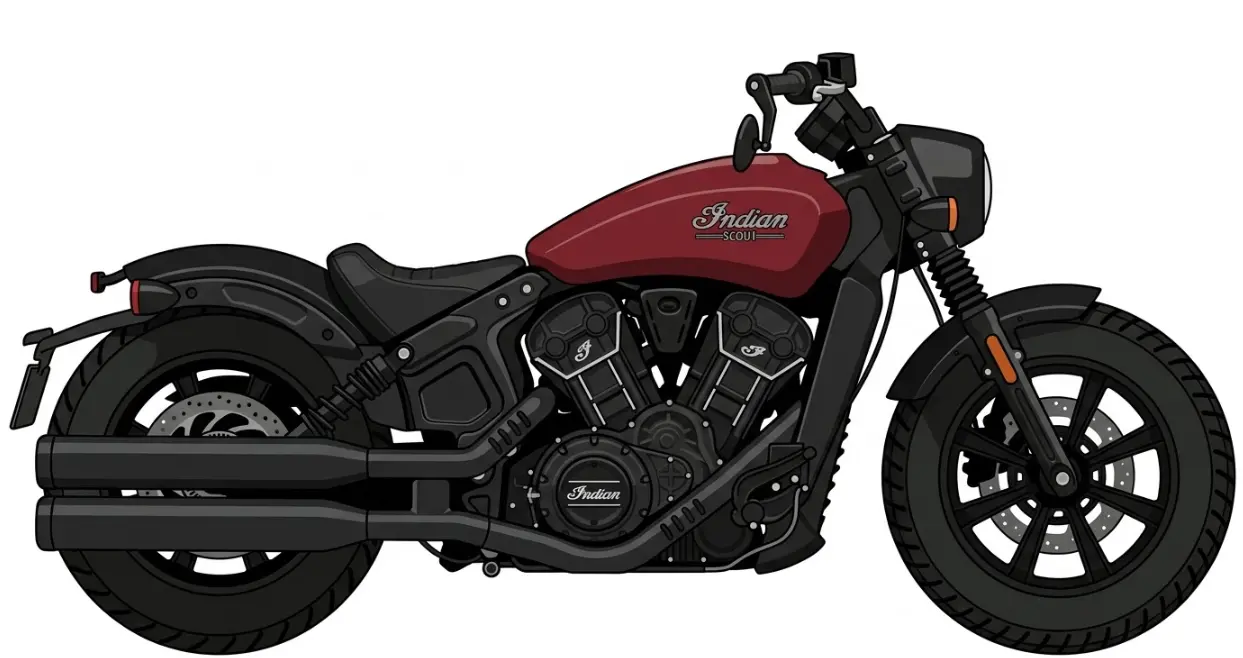
When evaluating a Cruiser machine like the Scout Bobber, comfort and control go hand-in-hand. While it is delivering solid performance, the defining factor for many riders will be its 25.6″ (649 mm) seat height. Pushing a wet weight of 556 lbs (252 kg) along a well-balanced chassis, this bike demands a proper physical match to ensure you aren’t struggling to hold it upright on uneven terrain.
Let us examine how these static dimensions translate to real-world comfort and the steps you can take to customize the fit.
Key Specifications at a Glance
💡 Ergonomics & Expert Take
The Indian Scout Bobber’s 25.6-inch (649 mm) seat height is deceptively low; its moderate width at the thigh junction can splay legs, effectively raising ground reach for some riders. The aggressive rider triangle, characterized by forward controls and low bars, results in minimal knee bend and a stretched posture, which can quickly become cramped for taller riders, while shorter riders might find the forward reach challenging despite the low seat. Maneuvering the 556 lbs (252 kg) wet weight at low speeds is aided by a low center of gravity, but the forward controls demand deliberate foot placement. Its 100 hp engine provides robust acceleration, making it a capable urban and spirited backroad cruiser, with 45 mpg supporting its commuter role, though its ergonomics are not optimized for extended highway touring.
How to Modify the Scout Bobber
Do not let a poor factory fit ruin an otherwise great chassis. Whether you need to drop the suspension on the Scout Bobber to flat-foot safely, or raise the seat to alleviate sharp knee angles, here are the most effective structural solutions:
🤔 Not sure if the Scout Bobber fits your height?
Stop guessing! Use our Live Ergonomics Simulator to see exactly how your knee angle, hip angle, and ground reach will look on this exact motorcycle.