
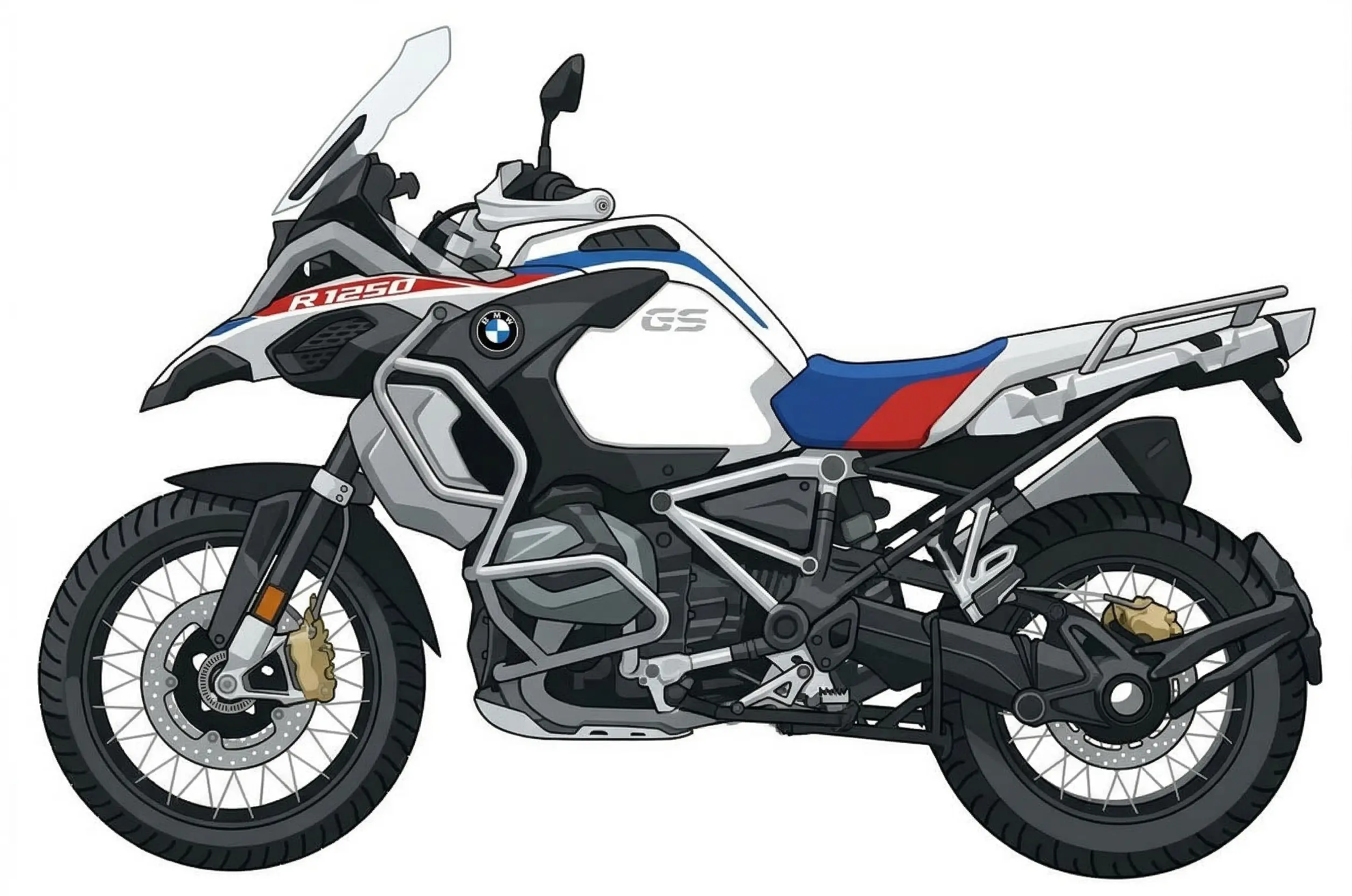
Stop-and-go traffic is where the true dimensions of the R 1250 GS make themselves known. As a capable Adventure contender delivering solid performance, the focus quickly shifts to its 33.5″ (850 mm) seat height. Balancing 549 lbs (249 kg) of mass on a well-balanced chassis means that flat-footing—or at least getting a solid foothold—is crucial for your confidence and safety.
Read on to discover the key dimensions, expert ergonomic insights, and the most reliable aftermarket modifications to perfect your ground reach.
Key Specifications at a Glance
💡 Ergonomics & Expert Take
The BMW R 1250 GS, with its 33.5-inch (850mm) seat height, presents a ground reach challenge due to a significantly wide saddle that splays the legs, effectively making it feel taller. The rider triangle is upright and spacious, offering excellent knee bend for most, though shorter riders will find flat-footing difficult. Despite its 549 lbs (249 kg) wet weight, the low center of gravity aids low-speed handling, but it still demands respect and deliberate input. Taller riders benefit from generous legroom. Its 136 hp ShiftCam engine delivers ample, tractable power for effortless highway touring and capable off-road excursions, complemented by a practical 50 mpg fuel economy for extended range.
How to Modify the R 1250 GS
Do not let a poor factory fit ruin an otherwise great chassis. Whether you need to drop the suspension on the R 1250 GS to flat-foot safely, or raise the seat to alleviate sharp knee angles, here are the most effective structural solutions:
🤔 Not sure if the R 1250 GS fits your height?
Stop guessing! Use our Live Ergonomics Simulator to see exactly how your knee angle, hip angle, and ground reach will look on this exact motorcycle.