
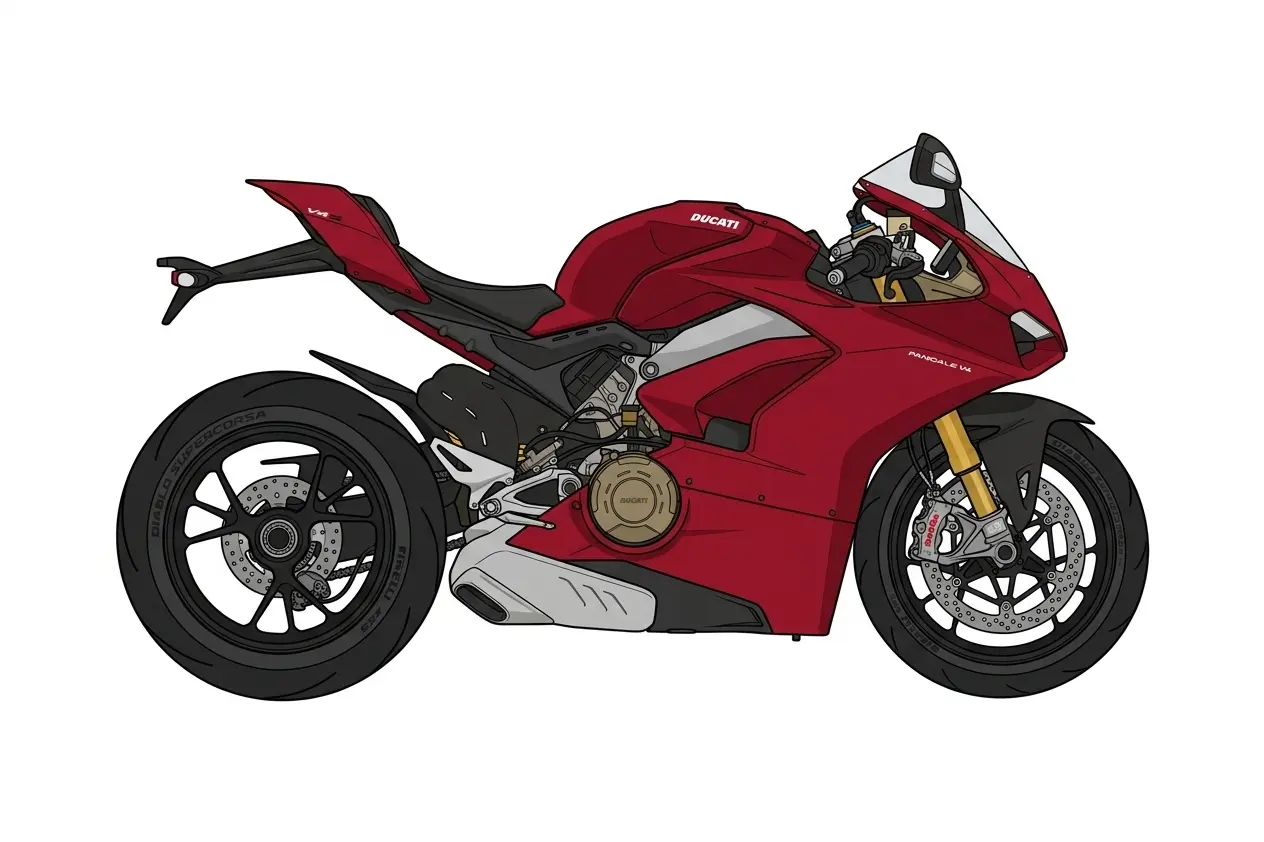
Built for Sport enthusiasts, the Panigale V4 boasts impressive specifications out of the crate, notably delivering solid performance. However, we need to critically examine the rider triangle. With a stock saddle height measuring 33.5″ (850 mm) and tipping the scales at 437 lbs (198 kg) ready-to-ride, evaluating how your physical stature meshes with this setup is essential for confident low-speed handling.
Keep reading for a comprehensive look at the geometric layout of this bike and the proven methods to optimize it for your inseam.
Key Specifications at a Glance
💡 Ergonomics & Expert Take
The Panigale V4’s 33.5-inch (850 mm) seat height is compounded by a relatively wide saddle at the tank junction, which significantly splays the legs, making ground reach more challenging than the number suggests, particularly for shorter riders. The rider triangle is aggressively track-focused, with high rear-set pegs creating an acute knee bend and low clip-ons demanding a forward lean, placing considerable weight on the wrists. Despite its 436-pound (198 kg) wet weight, the extreme geometry and limited steering lock make low-speed maneuvers feel cumbersome and heavy. Taller riders will find legroom tight due to the knee bend. With 214 hp (159 kW) and a meager 30 mpg (7.8 L/100km), this machine is unequivocally designed for high-performance track use, rendering it impractical for comfortable touring, efficient commuting, or any off-road application.
How to Modify the Panigale V4
Do not let a poor factory fit ruin an otherwise great chassis. Whether you need to drop the suspension on the Panigale V4 to flat-foot safely, or raise the seat to alleviate sharp knee angles, here are the most effective structural solutions:
🤔 Not sure if the Panigale V4 fits your height?
Stop guessing! Use our Live Ergonomics Simulator to see exactly how your knee angle, hip angle, and ground reach will look on this exact motorcycle.